Showing posts with label Books. Show all posts

Saturday, October 12, 2013

A Search In Secret India

After the Immortals of Meluha, this is my second book review. But this book "A Search in Secret India - Paul Brunton" is not a fictional novel or a philosophy book. This book is basically a diary entry of Paul Brunton, a Westerner who searched for a secret in our sacred land, India.

What was that he was searching for? Diamonds? Emeralds? Rubies? or other precious thing? No, he was searching for something big and immortal.. He was searching for light, the "Enlightenment". 

This book will be close on the lines of the book "Autobiography of Yogi (ABY) - Paramahamsa Yogananda" in terms of genre, but there is a broad difference. ABY is basically the biography of a person, who was Yogi by birth and groomed by greatest spiritual masters for the purpose of spreading ancient Yoga to the West. Also, Paramahamsa Yogananda was a Hindu, and he had no difficulties in believing Hinduism and its principles.  Also his parents were direct disciples of Lahiri Mahasaya who himself was direct disciple of Mahavatar Babaji. So, he was already put in a right place. He has no difficulties in reaching to the peak of spirituality. 

In this case, it is reverse. This is the travel-documentary of Paul Brunton, a common man with just an ambition to explore the Secret of India. He is neither a son of Yogic parents, not well-worst with Hindu principles and customs. Throughout his journey, he need the help of translators for communicating with others. A really great ambition, but a real tough task. So, whats great in this book? 

It was first when his Geography master was saying the words "India has been called the brightest jewel in British Crown...", the word INDIA fantasized him. Being a seeker, strong-willed and traveler by nature, he makes attempts to make his journey to India, but he couldn't succeed. Probably his time wasn't ripe then. From then on, the book starts its fast and mysterious pace. He meets a couple of Indian Yogis, settled in West, who reminds him of his ambition and fuels him for his journey East to India. By then, he was a renowned journalist in West, and his inner-search was so intense, he gave up his career to achieve a bigger one.

Being not-aware of where to start and what to start, he starts his spiritual journey, documenting it throughout. This book is all about that. All way his journey, he meets faqueers, magicians, mystics, yogi's, swamy's to finally meets his Guru.

In my opinion, this book stands apart from all other books I read.

1. This book is not written from the stand point of a Guru. It has no philosophies, no preachings or what so ever. It just echos the journey of a seeker on his way to attain Enlightenment. 

2. Being an intellect, Paul Brunton is very clear on not accepting everyone he meets as his guru. More than this divine experiences, his questions on God, Yoga and other practices fill this book. He wants clear proof of everything, and accepts only if he is satisfied. One of the yogi he met gives him a demonstration of stopping his heart-beat, breath and even his blood circulation to get him satisfied on the body control aspects of Yoga. This questioning attitude of him makes the book more interesting to read. So, did India and Indian Yogi's convince this westerner and gave him what he desired? 

3. The Author travels east-west throughout India for this search of a Guru. Finally, he meets his Guru in deep interior South, at Thiruvannamalai. His Guru was none other than the great Ramana Maharishi. It was through Paul Brunton, the Maharishi got introduced to the West. If you see Westerners flocking Ramanar's Ashram still, the credit goes to Paul Brunton. If you read the book, you can clearly observe one thing. Though it was Paul Brunton who travelled India, it was the mystics and the faqueers, who guided him to his real Guru. They are the ones who drove him to his destiny. In one stage, he meets Kanchi Maha Muni Sankaracharya, who directs him to Ramana Maharishi. At this point, Sankaracharya whispers something to authors translator (Writer VenkataRamani). After the author meets Ramana Maharishi, he journeys back to remaining part of India in search of other Yogi's. Being intellect, he wants to find the best Yogi in India to accept as Guru. After his long and deep search, his intellect finally falls and the destiny makes him to rush towards Arunachala. During his way back to Tiruvannamalai, he meets his translator again, and to his surprise she says that she already know that he will return back to Arunachala. She reveals him that Sankarachaya foretold her already (that whisper) that no one can be the Guru of Paul Brunton, except Ramana Maharishi. Such is his destiny.

Being intellect by nature, he asks lot of questions to whichever Yogi's he meet during his journey. Finally when he met Ramana Maharishi, he experiences his questions vanishing mystically. He feels a deep peace within him, where questions made no sense. Spirituality is more experiencing than questioning, and Ramanar gave him the right answer. He wanted a proof, and he experienced it himself.  All his bundle of questions just dissipated after self-realization. Having got the privilege to be a disciple of Ramana Maharishi, and experiencing the self-realization in guidance of his Guru, he returns back to West, with this ambition duly filled.

Generally, spiritual or philosophy books are dry to read, for there will be lot of advises and religious preachings that will be difficult to grasp. But this book, captures India, its culture, tradition and its ancient secrets during 1930's from the eyes of a Western seeker who demands demonstration than explanation. Its a 300 pager book, but hardly took me only few days to read. His experience with every mystic, original and duplicate faqueers are quite interesting to read, and gives the reader a feel of travelling along with him. 

There is a wonderful quote from Ramana Maharishi that reads "What will not happen will never happen, whatever effort one may put forth. And what will happen will not fail to happen, however much one may seek to prevent it. This is certain".. I clearly could get a grasp of what it means after reading this book. Even before the author sets his journey to India, he was foretold that his ambition of meeting a real Rishi would be attained, and he wont return empty-handed from India. His destiny was set, but how he was made to achieve it, how he got directed towards the goal - just read and experience. Its a must-not-miss book, atleast for intellects who demand proof of things.

A rare video where Ramana Maharisihi poses with Paramahamsa Yogananda and Paul Brunton. Dont fail to note that throughout the video, Maharashi will be very still as if he entered into trance. 

Saturday, March 16, 2013

Meluha, Naga and Vayuputras


The blog title may sound unfamiliar, but those words will be something you will not forget after reading the Shiva Trilogy books by Amish Tripati. What the book is all about and what impressed me with those books is this blog. Don't expect too much for I'm not going to reveal any part of the story or break any suspense, but will just state my experience of reading such a wonderful novel.

To start with, its a fictional novel released in three parts (trilogy). Title
1. The Immortals of Meluha
2. The Secret of Nagas
3. The Oath of the Vayuputras

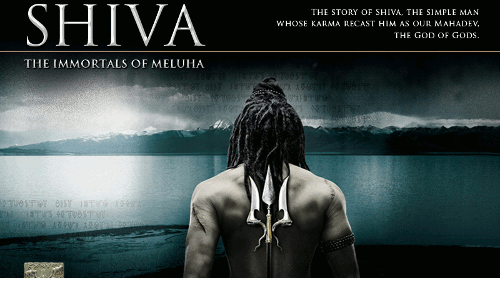
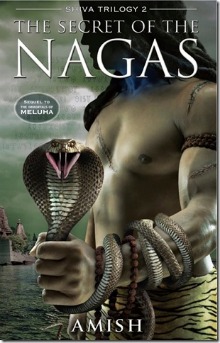
Last year, for one of my colleagues birthday, we planned to gift him a book. While snooping through the best sellers in  flipkart, the cover photo of one book immediately caught my attention. The cover showcased a well-built man standing in front of a river facing us backside, with war-wounds on his shoulders, bearing Jadamudi and a Trishul resting on his spine. As I did, anyone could guess that Trishul and Jadamudi are symbolic representations of Lord Shiva, but the Title of book was something different. It read "The Immortals of Meluha". I never heard about the word "MELUHA", so I thought it could be some other language book, possibly translated to English. After going through the summary of the book, I felt it a worth read. Caption for this book read "THE STORY OF SHIVA. THE SIMPLE MAN WHOSE KARMA RECAST HIM AS OUR MAHADEV, THE GOD OF GODS". In Hindu culture, the clan-god (kula deivam) will sometimes be our ancestors who lived a noble life long ago, protecting our clan (kulam) through their deeds, there by getting the respect of being worshiped as clan god. What if Lord Shiva falls under such cadre, but of higher magnitude to be called Mahadev? SJV usually mentions that Shiva is just another man who lived flesh and blood, invented Yoga techniques and became a Aadhi-Yogi (The First Yogi). 

Not sure my colleague will be interested in reading such fictional books, that too when it touch-bases God. Now-a-days many people don't show interest in reading and understanding the concept of God - not mystically but even scientifically. Its always easy for anyone to say "nothing such exist".. :).. Anyhow, not to take chance, we ordered him the biography of Steve Jobs, but I personally couldn't resist ordering the Part 1 and Part 2 of the Shiva Trilogy. (It was around June/2012. Part 3 wasn't released by then. It got released only in March/2013).

Flipkart delivered the two books the next day, perfectly packed. More than the books, it was the cover photo that impressed a lot. Excellent creativity. With great that hope the books wont disappoint me, I started reading.  There is one very good thing about reading books. Your mind will start creating the ambiance and the characters as described in the book. If you watch the same thing in  movie, your imagination will be restricted to what is just shown. In that way, even the cover photo of this book was intelligently designed not the spoil my imagination about the main character of the novel. In the cover photo of all the three books, only the body of a well built man appearing with blue throat will be depicted. The face of him is left for us to imagine. Very excellent thinking...

In the first few pages of the book, the main character gets introduced, set in backdrop of 1900 BC, in the land of Tibet - A man sitting with his friend sharing the chillum - it was more than a perfect start for me.. Next few pages, the book caught me like a magnet. I couldn't keep it down. My mind has already created the required environment to journey with the book further. It didn't want to come out of it. Next few pages, other characters we know as part of the Hindu culture gets introduced - The Nandi, Veerabadra and others... Further reading, I lost myself in the world of Shiva.

Most of us know the Shiva Puraanam, atleast about Shiva, Sati, Nandi, Ganesh, Karthik and other gods with some stories surrounding them. Amish Tripathi intelligently uses the family of Shiva, the stories said around them, but adds his own imagination to knit the stories and present you a wonderful tale to read.

In India, its always a bit risky to write new stories using Gods, let it be any God. We are driven by centuries old faith, and are limited to accept any new thinking. You can always create your own new god, but specifying a new dimension to any existing god is a problem. But this story directly puts Shiva as common man, trying to fulfill his karma like any other character. But this book, I say will fascinate even a hard-core devotee of Lord Shiva. Though its a fiction story, I'm sure the respect we have for Lord Shiva will increase multi-fold after reading this book. Such a wonderful character definition.

Though fictional, this book has the perfect mix of action, romance and sentiment stuff. I would specifically say that Amish has a extra nerve for romance. The love scenes (not the English love, its the real love)  between Shiva and Sati - I was almost into it. Let it be the scene where Sati proposes to Shiva or during the last few moments between them, it created a lump in my throat. I went into such emotional state when reading two books in my life time - One is the biography of Ramakrishna Paramahamsa (where he suffers throat cancer and couldn't eat) and other is the biography of Ramana Maharishi (his first entry to Thiruvannamalai). Atleast the incidents in Ramakrishna/Ramana Maharishi books are facts, but this is only a fictional story. But literally it blew me away.

Not only tearful moments, few other scenes where Lord Shiva will perform a dance for Sati - the way its narrated - and the visuals that my mind projected - Marvelous - Nothing more to say. I can quote many incidents from this book like that - example - in the last part during Shiva's encounter with Parvateshwar who wants to serve Meluha, and Sati's braveness in challenging her enemies till last breath - Spell bound.

The last book was like 560 pages, and when I was reading around 300 pages, I thought to stop reading further. The remaining 350 pages, I could breeze through quickly, but that will end the story right? I really don't want it to end. The beauty is, I could guess how the story will end, because the complete novel is based on existing Shiva stories, but couldn't stop reading to see how the author progresses his imagination to reach the end.

Let it be the suspenses, war strategies, the rise of Neelkanth, Shiva-Sati love, brotherhood between Ganesh-Karthik, the love between Sati and her sons, Kali character, Shiva's anger, Meluhan's novelty,  Daksha's foolishness, Bhrigu's master mind, the Vasudev's, the Vayuputras - I still couldn't believe that an Indian writer can have such a highest amount of creativity and imagination to visualize and present a book like this. Far as I know, Mahabharatha is the only epic that had such a wonderful story telling. I'm nowhere comparing Mahabharatha-Shiva Trilogy, but once you read these books, you can understand why I mentioned the last statement. 

The author should have done extensive research to make sure he uses the right prevailing stories to make up his fiction - for example, Surapadman gets killed by Karthik, but not the way as we have seen in "Kandhan Karunai" movie, where Surapadman imprisons all Devas, while Karthik kills him and frees them up. Amish takes only the core incident here "Surapadman gets killed by Karthik", but throws a different version of story surrounding it. That makes the novel far more interesting.

Does that mean there are no contradictions in the novel? Yes, there are, but not worth considering. For example, Shiva in this novel gets depicted after Lord Ram's period, whereas Ramayana states that Lord Ram himself  has consecrated and worshiped Shivalingam at Rameshwaram. This appears to be contradicting. However the author states a fair assumption that the "Shiva" before Lord Ram's age could be "Lord Rudra", one other Avator like Shiva to destroy the evil of that time. Another good character definition is that he makes Sati a widow, before marrying Shiva. This is completely contradicting with the original Sati (Dakshayini) story we saw in "Thiruvilayadal" movie, however, to justify the birth of Ganesh and Karthik (not through Shiva), he makes this intelligent choice. Also with the flood pace the story moves, the negatives are completely swept.

I stop my nonsense here. Overall, its a DONT-MISS story to be read. I strictly recommend purchasing a hard-copy pack of these books for your reading, for the hard-copy itself will add value to reading, and its definitely worth spending few hundred bucks for such a wonderful fiction. For why-to-spend folks, pirated pdf copy of all the three books are available in Net. Ask Google.

Buzz is that, Bollywood film maker Karan Johar has already started the ground work for making this wonderful story into a movie. If he can recreate this story as-is on screen without any commercial compromise, it could surely smash the box-office. Even if it comes in three parts, like the book, its worth a watch.

Monday, December 6, 2010

Chanakya

Just completed reading a book on "Chanakya" - The author of "Artha Sashtra", pioneer of political science. The book was mostly related to his oath on building a new empire, eradicating the Nanda dynasty. Hope many would have read about him in their school days, but it was just a subject that time. Chanakya'a ambition was to form an empire who could rule entire India under his umbrella. Main reason for such a thought was to protect India from Alexander kind of supremos, who started conquering the whole world. India at time was split as multiple regions with rulers for each region, like South was split between Chera, Chola, Pandiya's.

Few interesting things..
1. Chanakya was born in Tanjore district [Kochi mandalam at that time], then moved to Pataliputra along with his father "Chanak". He was a political science teacher.
2. Though he had an ambition to form a "One India" rule, the thrust towards his goal was the insult he had in the kingdom on Nanda. He was insulted twice in Pataliputra, once when he was young [BTW, His father was killed in pataliputra and Chanakya moved to Dakshaseelam and learnt there] and the second time in the Nanda kingdom when he was thrown out during a meal time for sitting in front of gold plate which Nanda kings and their chief guru will use. Others will be served in silver plates..
3. Chandragupta Maurya, who has the right to be in throne, but suppressed by the Nanda rulers that time met Chanakya accidentally and surrendered him completely.
4. Followed was all Chanakya's work in collecting support from neighboring rules, forming a anti-force against the rulers, making Chandragupta name visible to the world [PRO] and slowly eradicating the complete dynasty and other surrounding rulers to make a single empire.
5. Many times they won regions through "brain" rather "fight". Chanakya was behind many scenes and Chandragupta didnt even know what'z happening... He just trusted Chanakya in full.
6. Once a grass/bush stuck him on his way to palace making him to slip down. He just digged around the grass, found its core root, plucked it off, burnt it, mixed with water and drank it. Anything interfering on his way was his enemy and has to be rooted down. This was the time when Chandragupta Maurya met him. Since they had the same goal, they become close friends..

Due to lack of time, i cant write the whole story here. But its always amazing to read the history on how a single man, born somewhere in south side, stood out to completely change the history of India, that too 2300 yrs back, when India was split into multiple regions and Alexander was eating up the whole world. Earlier I had a negative impression on Chanakya like he was a kind of wicked politician, using Chandragupta as a key to fulfill his oath. But after reading him to some extent, it was a real surprise to see that Chanakya had a real big ambition [One India] for the interest of his country, and many incidents quote that people loved him.

One example was, Chandragupta, Chanakya and other royal men went on a pilgrimage to Kasi and other holy places. During the time, Chanakya ordered to build a stupa with four sides.. One side with Buddhist sculptures, second side with Jain stuff, third with Greek stuff and the fourth side left blank. The "blank" side was to respect people who dont believe in god. Amazing isnt it?

http://bhojpuria.com/people/chankya.php

- Raguraman